Is it a real pattern or just a bad week?
By Tristan5 min read
- emotional patterns
- self-awareness
- journaling
- triggers

On this page 7
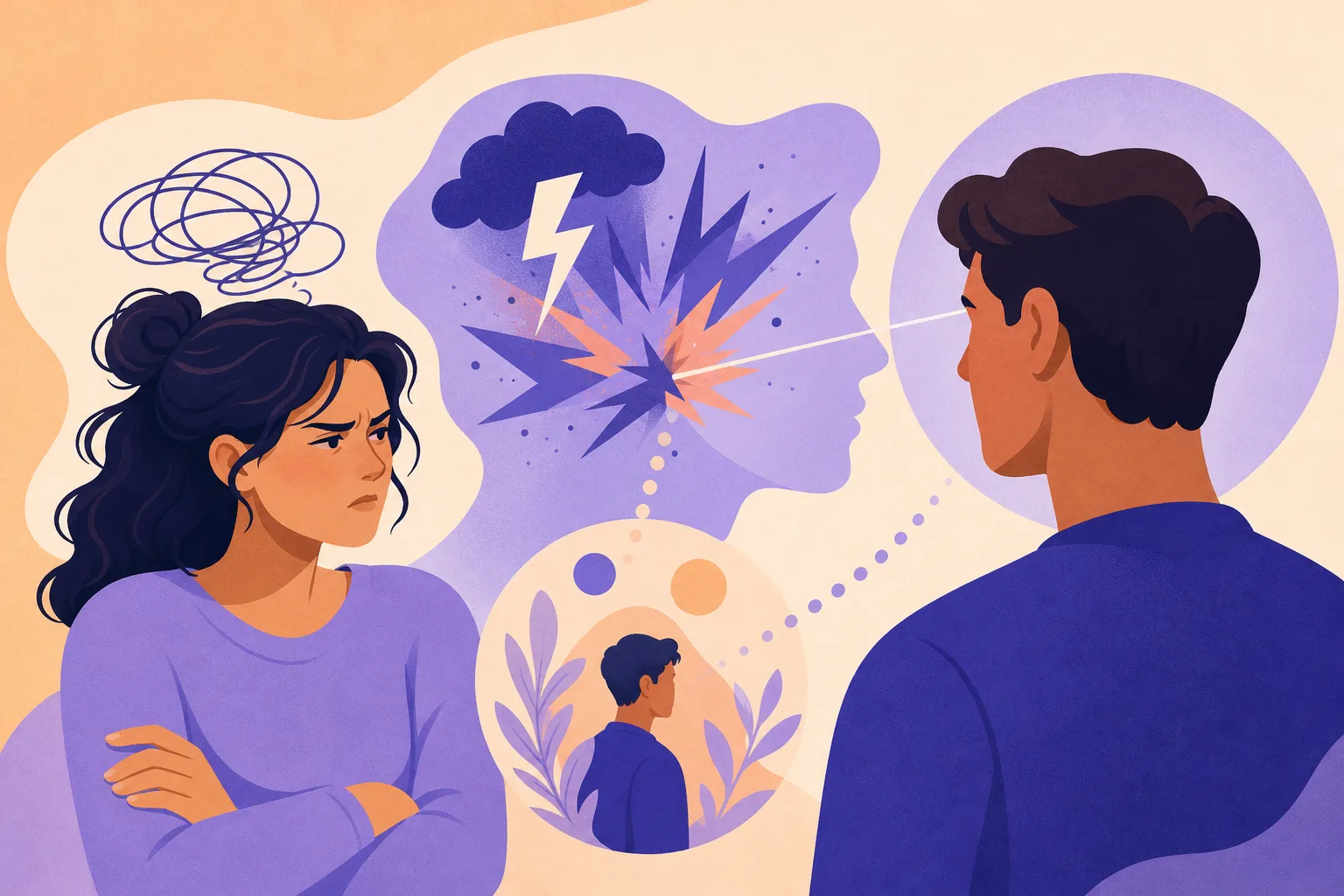
Something is probably a real pattern if it keeps showing up after the stressful week is over, in different settings, set off by the same kind of trigger. It is more likely just a bad week if it clusters around one clear cause and fades when that cause goes. You can't settle this by thinking harder in the moment. What works is writing down each time it happens, briefly and right away, for a few weeks, then reading it back when you're calm.
Pattern or bad week: how they differ
| Bad week | Real pattern | |
|---|---|---|
| When it shows up | Clustered around a deadline, illness, conflict or poor sleep | Keeps returning in ordinary weeks too |
| Where it shows up | One area of life, such as work | Across settings: work, home, friends |
| What sets it off | Many different things, because everything feels heavy | The same kind of trigger each time, like being criticised, ignored or rushed |
| After the cause ends | Eases off | Comes back the next time the trigger appears |
| Predictability | Hard to predict | You can start to guess when it will happen |
One item on its own doesn't decide it. A bad week can include a real pattern that only became visible because you were stretched. The question is whether the reaction outlasts the circumstances.
Why it's so hard to tell from the inside
The mood you're in shapes what you remember. On a low day, past moments that match the low mood come to mind easily, so it feels like you've always reacted this way. On a good day, the same habit can seem like it never happened. Either way, memory gives you a skewed sample.
Your mind also builds a story fast. One snappy reply becomes "I'm someone who loses my temper," and from then on you notice the moments that fit and miss the ones that don't. The most recent incident counts for far more than it should, and the slow, quiet repeats spread out over months are the hardest to see at all.
That's why the answer comes from records made at the time, not from looking back.
A simple way to test it, starting today
- Name what you keep noticing in one plain sentence. For example, "I go quiet and sulk when plans change last minute." A vague label like "I'm moody" can't be tested. A specific behaviour can.
- Log each time it happens, within a few hours. Write four things: what happened just before, what you felt, what you did, and how the day was going otherwise (sleep, stress, food, who you were with).
- Log the near misses too. Note times the trigger happened and you didn't react that way. These are what separate a pattern from a story you're telling yourself.
- Add a short daily note even on calm days. One line is enough. Without it you only have the bad moments and no baseline to compare them to.
- Wait before judging. Keep going until you've had at least one ordinary, unremarkable stretch, not just the hard week that made you start.
- Review on a calm day. Read everything in one sitting and ask the questions below.
A log entry might look like this:
Tuesday, 6pm. Partner said dinner plans were off. Felt a hot drop in my stomach, then flat. Said "fine" and didn't talk for an hour. Slept badly the night before, long day at work.
What to look for when you read it back
- Repeating triggers. Do the entries share a theme, like feeling dismissed, losing control of a plan, or being watched?
- Context independence. Does it happen on rested days as well as exhausted ones? If it only appears when you've slept five hours, sleep may be the real pattern.
- The same thought each time. A recurring line, such as "nobody takes me seriously," often points to the trigger more clearly than the event does.
- The ratio. If the trigger happened ten times and you reacted twice, that's different from reacting nine times.
- What changed when it stopped. If it faded, note what else changed around then.
If the entries are scattered with no common thread and they bunch up in one difficult period, you're probably looking at a bad week. If the same trigger, thought and reaction keep lining up across different weeks, you've found something worth working with.
Making the record easier to keep
The method above works on paper or in a notes app. The hard part is keeping it going and spotting links across weeks of entries. undrstand is one way to do that. You can log a quick check-in, answer one question a day, talk out loud, or photograph a page of your paper journal, and it looks across what you've shared to show recurring triggers, repeating thoughts and habits that keep getting in the way. You can also describe a small check-in of your own, such as an evening one that asks how the day went and what got to you, so the notes you need actually get written.
When it's more than a pattern to track
If what you're noticing is persistent low mood, panic, thoughts of harming yourself, or reactions that are seriously affecting your relationships or work, don't wait weeks to find out if it's a pattern. Talk to a doctor or mental health professional now. Self-reflection can help you understand yourself, but it is not a substitute for professional care. If you do keep notes, they can be useful to bring to that conversation.