Triggered or justified? How to tell whether your reaction fit the situation
By Tristan5 min read
- emotional triggers
- emotional reactions
- self-awareness
- overreacting

On this page 7
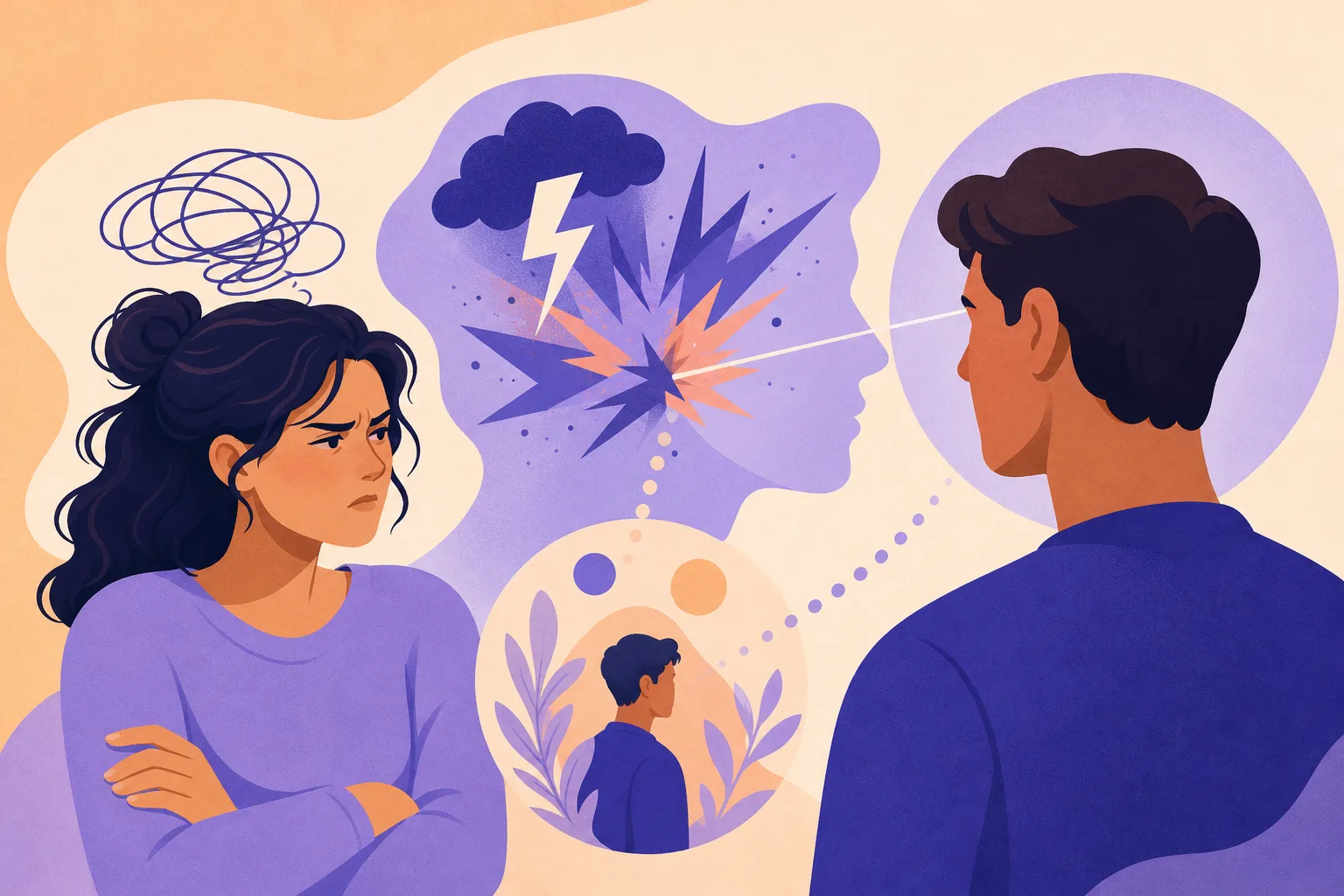
You can usually tell by comparing what actually happened with how big, how fast and how familiar your reaction was. A reaction that fits matches the stakes, makes sense to you when you explain it, and settles once things are dealt with. A triggered reaction tends to arrive instantly, feel bigger than the moment, carry an old, familiar feeling, and linger after the situation is over. These are often not either-or: something can be genuinely wrong and hit an old sore spot, and then the reaction is partly earned and partly louder than the moment.
Signs your reaction was triggered
None of these alone proves anything, but several together are a strong hint:
- Speed. The feeling arrived before you had time to think about what was said or done.
- Size. You'd rate the feeling an 8 out of 10, but the stakes were a 3.
- Familiarity. It felt like an old feeling you know well, such as being dismissed, left out or blamed, rather than something new.
- Age. You felt younger, smaller or more helpless than you normally are.
- Certainty about meaning. You were sure you knew what the other person meant ("they think I'm useless") when the facts allow other readings.
- Staying power. You were still replaying it hours or days later, long after the practical issue was settled.
- The body led. Your chest tightened, your face got hot or your stomach dropped before any thought formed.
Signs your reaction fit the situation
- You can name the specific thing that was wrong, not just how it made you feel.
- Someone you trust would likely react in a similar range if it happened to them.
- The feeling eased once you acted on it, got an apology or let it out.
- Your response pointed toward something useful, like setting a limit, asking for a fix or leaving.
| Fits the situation | Triggered | |
|---|---|---|
| Speed | Builds as you take it in | Instant, before thought |
| Size | Matches the stakes | Bigger than the stakes |
| Feeling | About this event | Old and familiar |
| What you focus on | What happened | What it means about you |
| Afterwards | Settles once handled | Keeps replaying |
Five checks to run after the moment passes
Try these once you've calmed down a little, even an hour later. They work on paper or in your head.
- Write the bare facts. Only what a camera would have recorded: who said what, in what tone, what happened next. Leave out interpretations.
- Write what it meant to you. Now write the story you told yourself. The gap between step 1 and step 2 is where triggers usually live.
- Rate the stakes and the feeling separately. How much did this actually affect your life, 0 to 10? How strong was the feeling, 0 to 10? A big gap points to a trigger.
- Ask "when have I felt exactly this before?" Not a similar situation, the same feeling. If an answer comes quickly, that's the old thread being pulled.
- Split it into two parts. What part of the reaction belongs to today, and what part belongs to something older? Both can be true at once.
An example of what that split might look like:
My manager answered my email with one line and no greeting. The facts: a short reply, nothing rude. What I felt: that I'd done something wrong and was about to be in trouble. Today's part: a bit of annoyance at the curtness. The older part: the dread of someone being cold to me and not knowing why.
The annoyance fit. The dread was bigger than the email.
Why it's so hard to tell from the inside
In the moment, a strong feeling feels like evidence. If you're furious, it seems obvious that something infuriating happened. The feeling doesn't come labeled "this is partly about 2014"; it just arrives as a reading of the present. Old experiences shape what you notice and how you interpret it without announcing themselves.
It can also cut the other way. If people have often told you that you're "too sensitive", you may assume every strong reaction is a trigger and talk yourself out of reactions that were completely fair. The goal isn't to distrust your feelings, it's to understand which part of them is about now.
Why one incident rarely settles it, but a pattern does
A single reaction is hard to judge. It might have been a bad day, low sleep, or a genuinely unfair moment. What makes triggers visible is repetition: the same kind of situation producing an outsized reaction again and again, across different people and settings.
If you jot down a line or two each time you react strongly (what happened, how intense it was, what it seemed to mean), themes start to show after a few weeks. You might notice that criticism barely touches you but being ignored floors you, or that it's always worse when you're tired or after talking to a particular person. A notebook works for this. undrstand is another way to collect these moments, through quick check-ins, talking out loud or a photo of a journal page, and it looks across them for recurring triggers and thoughts so you don't have to spot the thread yourself.
Once you know your triggers, you can catch them earlier: "This is the being-ignored feeling. Let me check the facts before I reply."
When to get more support
If your reactions are frequent and intense, come with flashbacks or a sense of reliving something, are tied to trauma, or are damaging your relationships or work, talking to a therapist or another mental health professional is the right step. Self-reflection can help you notice patterns, but it isn't a replacement for that kind of help.